I keep thinking about all of the journey imagery that was used in the last few seasons and the “River shall end at its source.”
We’ve arrived at the source. Mary’s alive and Sam and Dean are struggling with what that means for them. So here we have Dean fumbling over road blocks and dropping and breaking ships. They’re played lightheartedly, but it seems like it’s a way of reinforcing how much he is struggling along this journey.
Since season 1, Mary’s been commonly associated with pink, red, and white colors, but particularly pink and red flowers. Here she is in WIAWSNB and In the Beginning.
Amara, too, was associated with pink and red, and introduced with pink and red flowers. Little did we know at the time, but that was foreshadowing Mary’s return.
Well, then, we have something else to learn about Mary, don’t we. We’ve already learned that she didn’t cook that meatloaf or pie that Dean remembers so fondly. What else is going to be revealed?
I think we’re being given clues in the parallel that is being drawn between Mary and Toni. They’re both mothers, obviously, but there have been other visual motifs that are drawing them into association. I get the feeling that, like Mary and Amara, there’s something more going on here.
Here we have Toni on the phone with her son, re-establishing that, yes, she is a mother. “I know, darling, but mummy will be home soon. I miss you, too. I love you so, so much.” Note the pink flowers on the wallpaper behind her.
Here is Toni surrounded by pink flowers, again.
Now, you could argue that the flowers there hint that this interaction was a manipulation, that things are not quite what they seem, but I think there’s more. Toni and Mary are the only people with whom Sam was physically intimate. We didn’t get that greatly anticipated Dean and Sam reunion embrace this time, like we’ve come to expect.
Toni likes tea and seeks information about hunters from Sam. She finds that the way to get to Sam isn’t through pain, it’s through intimacy and the promise of affection and acceptance that he has longed for. (”Really, you don’t ever want something more? You don’t ever think about something? Not marriage, or whatever, but, something, you know, with a hunter? Someone who understands the life?” Season 11: Baby)
Sam wonders if Mary likes tea.
And he brings her his emotional vulnerability, and, importantly, information.
So here we are. Mary and Toni are being brought into close parallel, all surrounded by themes of death, danger, betrayal, and choices that may lead them down the path of becoming monstrous.
Supernatural has carefully reminded the audience about Mary’s initial deal with the YED and the culpability that she feels. We’ve been reminded that she chose John over the rest of her family. It may have been 30 years for her sons, but for her, she just lost John. And now she’s learning all the ways that her death changed him and her children into something they weren’t before.
Why bring up Ruby, and make sure the audience remembers her? Again, Ruby was someone with whom Sam was intimate, someone who manipulated and betrayed him. But why also bring up Benny? Did Toni, too, make a Sophie’s choice at one point like Mary did? Where is her husband/the father of her child? What happened to him? Is that why she is so adamantly against any association with monsters? Did she make a choice that horrifies her and gives her that fierce belief that anyone who associates themselves with monsters isn’t no better than them? Does she HAVE to believe that, or else she wouldn’t be able to live with herself? What did the British MOL make her do?
And so, what does this mean for Mary? Mary, like Ruby, betrayed Sam once. What will learning about hunters do for her? What choice is going to be presented to her? What is Mary going to do?
A long, long time ago (season 2?), in a meta community far, far away (LJ), we had an explosion of speculation about flowers.
Flowers unfold. As buds, their inner parts are hidden, secret, until they come to their full bloom and reach their peak of potential. Supernatural uses many, many visual motifs to reinforce its narrative. Flowers are one of them.
I would argue that flowers are used as a visual motifs to hint at secrets, that there are things yet to be revealed.
They were first introduced subtly in Home. First on the wallpaper of Sari’s room, where it was later revealed that Mary had been residing in the closet.
In Home, we learned that Mary’s death was even more complicated than we had known before. But that just introduced more of a mystery. Why had she hung around after her death? Why did she tell Sam that she was sorry?
~*~
Once we reached What Is and What Shall Never Be, roses were found everywhere in the Winchester family home. Mary is the only family member still living there.
Everywhere Mary went, pink and red flowers followed.
~*~
Their last appearance associated with Mary was in In The Beginning.
All the pink and red flowers around Mary disappeared once it was revealed just how she came to be linked to the mytharc through the Yellow-Eyed Demon. ( After that, she started showing up in blue with white flowers or white with blue flowers. White=death, blue=sacrifice.)
When we first meet Ava here in Hunted, she seemed one thing, but then she disappeared without a trace. Where she had gone and why were a mystery. When we met her again, she was something else entirely.
Once the narrative started focusing on the mystery of Azazel’s children, yellow flowers showed up around Sam. Note the bedspread in The Kids Are All Right. It’s yellow damask. Damask is a fabric weave which is strongly associated with roses.
They appeared in front of Dean at his first visit to a crossroads in Crossroad Blues.
There they hinted that something was yet to be revealed regarding the fate that would bring Dean directly into the mytharc associated with Sam and the YED’s children.
Now, here we have Season 11 and a nice intro to Amara/The Darkness that involves, you guessed it, more flowers.
Yellow (yellow=supernatural) and purple flowers (purple = perspective/POV/The Story that became the story), no less. And yes, she’s a supernatural being that definitely has a different perspective, a different angle on the story of creation than has been told so far.
The association between The Darkness and flowers didn’t end there, either. Here she is as the infant Amara.
I thought that once we learned who The Darkness was, the association with flowers would end. And it has…. but, we’re still seeing young girls/infants associated with pink, blue and white flowers. (Zoe in Just My Imagination, baby Eileen in Into the Mystic, Kat in Safe House)
The feminine, the vulnerable, threatened by the supernatural, who survive and cope/fight/thrive in their own way.
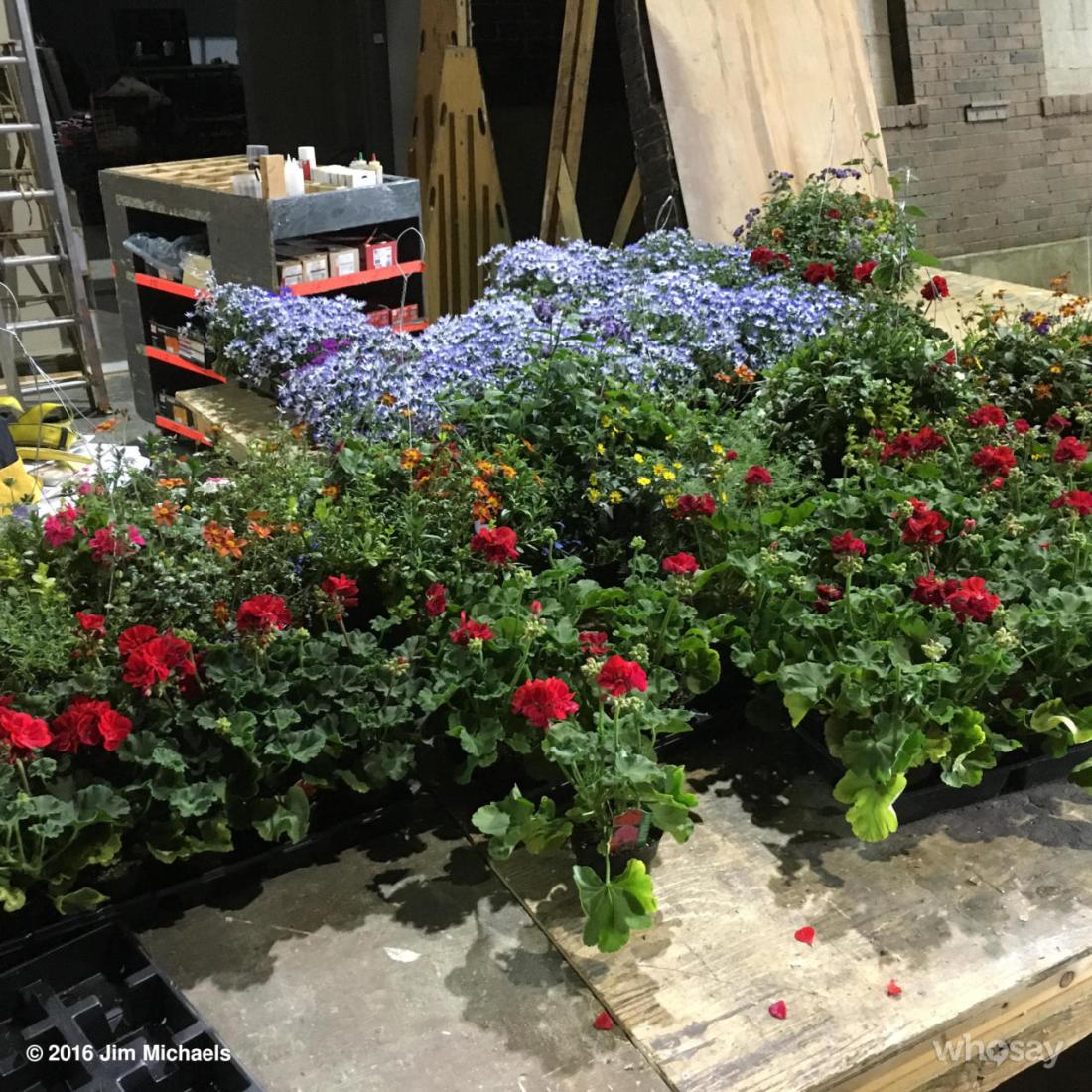
And now we have Jim Michaels teasing lots of red (danger/demons), yellow (supernatural), orange (temptation/perhaps we stared into the abyss too long), and blue (sacrifice) flowers for the season finale. All very interesting.
The classic song from Disney’s Pinocchio about a puppet who has gained freedom from the ‘strings’ that held him down (full lyrics here)ring particularly true when it comes to the soulless characters in 11×05 Thin Lizzie. Once Amara has taken away Sydney’s soul she describes it as freedom, peace at the quietening of her conscience, like a set of invisible strings had been cut from her:
“And then you can really fly.”
I mentioned in this post (thanks to @f-ckyeahfutbol and @postmodernmulticoloredcloak for your additions!) a couple of other connections to the tale of Pinocchio, for example how Len referred to his soulless self as a ‘robot puppet-man’, and how Dean talked about him holding onto any shred of conscience. It’s funny they should bring up soulless Sam as well in this episode because back in season 6 when Sam was soulless the two talked in terms of Pinocchio i.e. Dean is called Sam’s conscience, his Jiminy Cricket and Sam himself is called a puppet.
Anyway aside from this (just because I don’t know enough about Pinocchio at the moment to draw further parallels) I wanted to extend this connection into looking more generally at the dolls, dummies and mannequins in Thin Lizzie, and how they relate to the idea of a loss of control, of being soulless or under the control of another – puppets, essentially.
I find myself looking at keychains in the Gas-N-Sip. (I used to collect keychains when I was a little kid. I like keychains. Sue me. :P)
This week we got this:
Dice and what looks to me like poker chips. With a big bowl of dum-dum suckers on the side.
(What does this mean? I have no idea, but it appears to be anti-gambling. Or maybe pro-gambling if you want to call those lollipops and consider them as a reward, like so many pediatricians in America seem to do, instead.)
So, El Sol and Schultz are both fake beers made for SPN, right? (A lot of their beers are fake, but I’m just going to mention these two because they’re often shown near each other…I see two examples of that in this photoset, and the roadhouse from this week’s episode has it again.)
While El Sol and Schultz are both fake, they remind me of two real beers: Corona and Schlitz. Schlitz is “the beer that made Milwaukee famous”, while Corona is “miles away from ordinary”.
If you Google vintage Schlitz advertisements, you’ll probably find that they strongly feature American “manly-man” images. Cowboys, guys out fixing the family car with their trusty dog, fishing, hunting, etc. (Also, there’s a fair amount of 50s style husbands insulting their wive’s cooking and such. “At least you didn’t burn the beer!!”)
If you Google Corona ads, you get a bunch of beer bottles on tropical beaches. Often they don’t even have any people in them at all. They present the beach as being a place that is different from all other places. A place of peace and quiet. Maybe there’s a beautiful person there to share your time with, and maybe there isn’t.
The Corona ads are a clear escape from the Schlitz ads. The promise of El Sol is a clear escape from the Manly-Man American role espoused by Schultz.
Note that in the second Corona ad above, the beach is located in the suburban back-yard of America. You can find your beach, or make your beach, right where you are. The implication is that it is all in your mind.
( @neven-ebrez and @justanotheridijiton as well as others have already talked about the “false world” that is often implied when an El Sol sign is hanging near a Winchester brother. I just thought it was interesting that there is a real-world comparison to that symbolism used on the show.)
I would argue that if there is any symbolism between real beer and the ones mentioned on the show, “El Sol” is probably referring to the real Mexican beer Sol. Literally, there is a beer called Sol that is pretty much the same light beer as corona. That one is less about “miles away from ordinary” though and talks about freedom. But yes. That’s a thought too. And I mean Schultz and Schlitz.. and El Sol and Sol..? idk it makes more sense. They’re using different brands for copyright reasons probably, but I’d say that they would only tweak the name so much..
@drsilverfish brought up the real Sol brand as well, and I’m sure there’s some of that in SPN’s beer name, too. But what I’m talking about is mostly the advertising. If you look in that top left shot, that’s pretty recognizably a Corona-type ad. (By the way, in addition to meaning crown, corona is also a term for the halo-like circle of light around the sun, so there is a sun connection to this as well…though not as clear as the obvious connection to Sol beer.)
In real life, the brand of beer someone chooses says something about that person, in large part because of advertising. I don’t think it’s a very big stretch to say that fiction would do the same thing in the same way.
Schlitz beer had an ad campaign based on the traditional American Man role. Sort of like the Marlboro man was for the cigarette company. Corona, though, really came onto the scene in the 80s and stressed escape from every day life at home. Instead of parties and sports and hunting and the like, most of their ads were very serene and encouraged a departure from all that. Schlitz (and many other American beers) emphasize action and social situations in their advertising. Corona’s campaign emphasizes relaxation, isolation (just a few people if any are shown at all), and escape.
Sometimes the bottle is even used to cover up an unpleasant reality in the ad.
Corona ads have been pretty iconic for decades. They’re different from other beer ads in the States. It’s not just a beer, it’s a state of mind and a state of being. Corona somehow transports you somewhere else, someplace you’d rather be. That’s what the ads say.
But, you’re right, Sol’s emphasis on freedom is also interesting:
In real-life advertising, it’s pretty clear that the message is that beer isn’t just something to drink because it tastes good or will get the drinker buzzed. It offers something else. I think SPN is using many of their fake beer brands in the same way…they have a message (though how that message is interpreted is of course totally up for debate). In contrast to the old Schlitz campaigns, both Corona and Sol have to do with freedom from responsibility. In my opinion, Corona goes much farther into escapism though with their ads, and that’s what the ad line “go someplace better” on the El Sol ad reminds me of.
both Corona and Sol have to do with freedom from responsibility. In my opinion, Corona goes much farther into escapism though with their ads, and that’s what the ad line “go someplace better” on the El Sol ad reminds me of.
Well, that adds an interesting twist to Sam being called “sunflower” last season, in the midst of his massive denial about Dean and their situation. Keeping his face to the sun.
I love this collection of shots. And would like to add that I think the exit sign next to Sam in season 11 is indeed one of many potential instances of the foreshadowing of his death at the (near) end of this season. I also think that with Death’s demise, the exit signs might not be as straightforward as they have been.
As @lost-shoe and @dustydreamsanddirtyscars have said, it might be more a case of an indication of the death of co-dependence and not of an actual death, as – for all of Billie ’s threats- the Winchesters will live (unless this does turn out to be the final season, then all bets are off)
Also the fact that a lot of characters are framed with them could be indicative of a threat of the end of the world as we know it, given Amara is hell – bent on destroying God’s work, in which case everyone would die.
I also think that with Death’s demise, the exit signs might not be as straightforward as they have been.
Yeah, I was kinda wondering that myself. It wouldn’t be the first time a visual motif in SPN started off foreshadowing plot points for specific characters morphed into something indicating more general portents.
So, it may be more significant that an exit sign is lurking behind a human, in general, rather than Sam in particular. That would bring the 3 axis of Heaven, Hell, and Earth into parallel.
Supernatural makes vigorous use of visual imagery to support the narrative. Just one more example: color.
The association of the color white and death started with the two Women in White early in the first season
From there, Dean and John stripped down to their most vulnerable, with little left to hold them here.
Hints of death showed up in What Is and What Should Never Be. The girl, John, and Mary weren’t really there. It was all a dream of those long gone.
It was a dream where Mary was associated with pink and red flowers and Sam with yellow flowers. It was Dean, on the brink of death, who was associated with white flowers.
Sam wore the blue and white shirt of sacrifice and death at the end of Season 2.
White has hinted at death throughout the remaining seasons.
Until here, in bold, Death rides the palest horse.
I was struck by the similarity between the windows in the old distillery and the wheelwright’s workshop. Colorful in the distillery, black and white where the angels have taken Cas to torture him and mess with his programming. Reminds me of the punchcard-esque motif in Naomi’s office.
We know from the psychic in 10×17 that Cas’s very nature is colors. The angel minions’ black and white ties (rather similar to the stunt demons’), the windows, and the black hood all emphasize that they’ll be attempting yet another assault on Cas in the name of punishment and correction.
Also look at those old caged halo lights in the background – they’ve been associated with him for a looong time. Especially to symbolise when he’s trapped and controlled: 4×21 was huge on them.










 Hearseeno