I’ve seen more than one person write that she was already starving and dehydrated when ICE took her into custody, but how is it that ICE took this badly sick child into their custody and immediately didn’t get her the help she needed? Immediately upon taking her into custody, she became their charge, and they should have assessed her health and got her the help she needed immediately. The fact that they didn’t, shows profound negligence. Was this negligence because they do not have adequate in-take procedures in place, is it because they have too many people incarcerated to tend to their needs, is it because they just don’t care about these vulnerable people? Whatever the case, there is no shifting the blame; when they chose to take her into custody, she immediately became their responsibility and yet it was eight hours before anyone tried to help this child. ICE is an abomination, and so are any who choose to work for it.
This. By their own account, she was in their custody for 8 hours before the seizures started. The signs of dehydration and starvation are not hard to spot. Either she was never examined by a nurse or doctor, or whoever did examine her didn’t realize she needed treatment (or didn’t care). At any rate, as porticos says, once someone is in your custody they become your responsibility–because at that point nobody else has the ability to care for them.
In my earliest posts about the family separation debacle I predicted that this administration’s “policies” would lead to the deaths of children in their custody. I hoped I would be wrong about that. But I was not, because this kind of death is an entirely forseeable result of this administration’s “immigration policy.” And that is one of many reasons why this administration’s “policies” are abhorrent, intolerable, and atrocious.
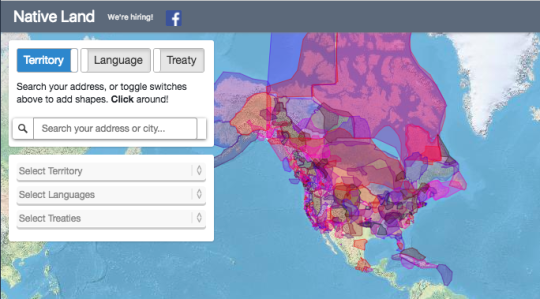
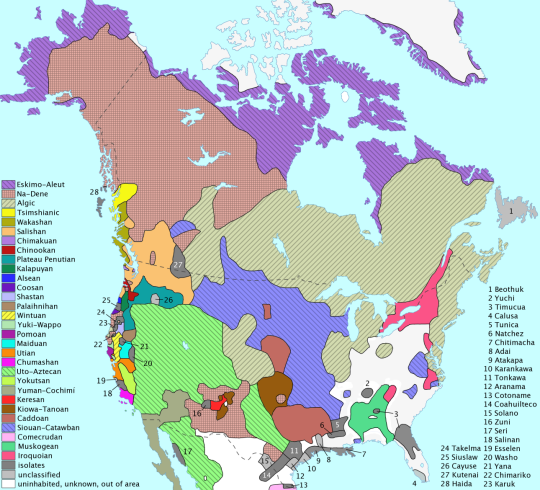
“One of the most distinctive things about the Native Land maps are the borders….Indigenous identities don’t map (pardon the pun) precisely onto modern European notions of nationality and territory…. Colonialism lives and dies by the map — and the carved-up world is so central to our perspective that many of us today see the earth’s lands primarily as chunks of nations….
The reality is just that borders don’t always function the same as the simplified maps imply when it comes to indigenous history; there is a lot more movement, overlap, and complexity than one nation on each chunk of land.”
The Aboriginal Mapping Network at nativemaps.org is a great site for finding resources (and a whole map community)! They got:
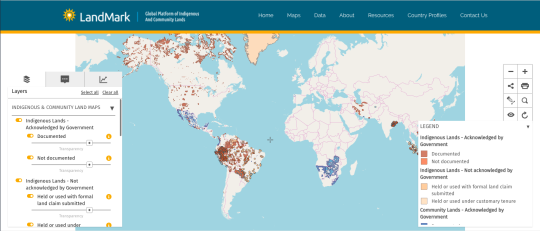
–Global ones like LandMark, an “online, interactive global platform to provide maps and other critical information on lands that are collectively held and used by Indigenous Peoples and local communities.”
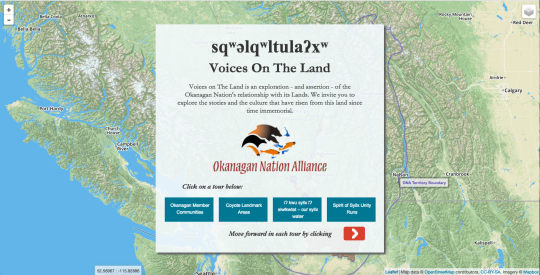
–Living Atlases created by nations and alliances like voicesontheland.org, created the Okanagan Nation
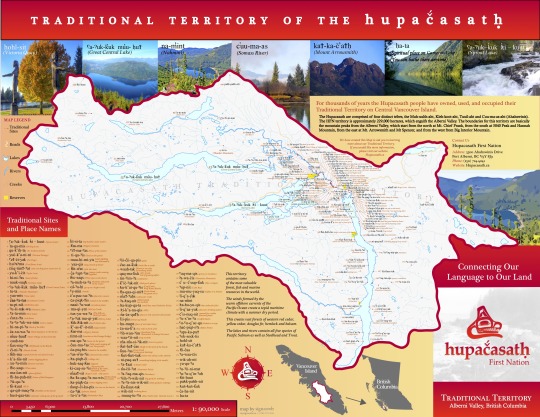
–More maps like these ludicrously pretty ones of Hupačasath lands, traditional sites, and place names. There are many, many more, and you’ll probably be able to find your region/people/language. Or just wander around!
-Links to Treaty Maps, this interactive map from the Canadian government, and historic maps like this series, which I like because it covers the early 20th century, which is often taught in classrooms as “After Indians.” Here are more maps of current populations and reservation lands in the United States.
Are none of these quite what you asked for? Yeah—I’m making a bit of a dig, but it’s not against anyone asking.
It’s against the fact thatthe map in the original post is from the 1970s. The linguistic theory has evolved since then; this is the map currently used in textbooks and even on Wikipedia. And I’m not talking about the level of detail, I mean there have been genuine changes in how scholars think the languages are related, and that has changed our picture of pre-Columbian historical events. It is very bonkers that the first map, which has been around long enough to look super dated to me,has never been taught this whole time.
This is the map you were asking for.
Land cessions animated by @sunisup from maps by Sam B. Hilliard of Louisiana State University, first published 1972.
I’m never criticizing anyone for starting with basic facts. We all should! I’m criticizing every history teacher you’ve had (and school board who limited the teacher, and college that didn’t prepare the teacher, and…) who didn’t do their job of tellin’ you the facts in elementary school, when you deserved to learn.
Facts about Native history aren’t Secret Wisdom. We don’t need a special reason to learn some facts. Native scholarship and Native scholars are thriving, so let’s explore their work, and question why information that exists has been deliberately overlooked so often.
Lactodumbass – an identity applicable only to lactose intolerant individuals who still find themselves consuming milk, chocolate, cheese and ice cream despite their allergy.
Today I found out that yarners think crocheting socks is subversive and controversial and I just…on one hand, why the fuck not, I guess yarners are allowed to have their controversies, but on the other, how much time do you have in your FUCKIN DAY??
My main concern is how they would feel but Maggie u know yarn fandom gotta think about something while knitting five miles of stockingnette for a sweater
Look, you can’t just leave it at that, why is it subversive and controversial? *gets popcorn*
I mean, I’m taking this on good faith, and I’m not saying this is my own personal belief. I believe in all crafts.
But…the structure of the stitches and the resulting fabric is pretty different between crochet and knitting. You get different effects between them, which lends themselves to different crafts. And none of the effects of (most) crochet stitches lend themselves naturally to socks. You’re (usually) going to end up with something either stiff and bulky, or full of holes that will Not Feel Good to walk on. Whereas knitted socks will just…BE elastic and comfortable.
Sure you CAN do it. And there are people and patterns that do it well!!
But MOST crochet socks are a bit like calling this a bicycle
I mean… Okay? But people are going to Talk.
But this is BABY controversy, this is nothing. You haven’t even touched on the good shit like RHSS or that time the Olympic Committee dissed us.
Iiiinteresting. So one of those “just because you CAN doesn’t mean you SHOULD” things.
Also I know very little about the yarn fandom except for that bit where a woman had to fake her death and had a nervous breakdown over selling homespun/dyed yarn so like, I already have big expectations.
Was that the one that “died” of leukemia or the one that “died” of lupus, or the one that overdosed?
From what I know of the narrative as it was described to me, I want to say the one that overdosed, but I am intrigued and vaguely concerned that there are multiple distinct individuals the above situation could apply to.
hey umm, what the fuck
the fake deaths thing: indie yarn dyer gets popular, gets overwhelmed by orders, can’t refund money because of shitty bookkeeping, decides faking online death is the only way out.
i’m sure some of them are unintentional rather than premeditated scammers but they’re all still thieving assholes who shouldn’t be running businesses and need to give all the money back.
the olympics commitee: ravelry, well-known knitting (fiber arts in general) site, held a contest they called the ‘ravelympics’ to drum up olympic support then get a cease-and-desist letter for copyright infringement, and the letter said that calling it that ‘denigrates the true nature of the Olympic Games’ and was ‘disrespectful to our country’s finest athletes’
except, you know, ravelry had like 2 million users who all, by nature of ravelry being a website, have basic tech literacy. the social media backlash was so bad that the olympics board had to make 2 official apologies because the first wasn’t good enough.
RHSS: Red Heart Super Saver is cheap Walmart-level yarn. some people hate it because it used to be just really fucking awful and they haven’t bothered updating their opinions. some people hate it because they hate non-natural yarns. some people hate it because they’re yarn snobs(which, btw, comes in two flavors: the disdainful assholes and the people who just don’t see the point if you have the money and don’t indulge yourself). a lot of people defend it because it’s cheap and widely locally available and honestly not that bad after a wash and some fabric softener.
crocheted socks: exactly what kaitoukitty said. people who crochet socks tend to either be new crocheters who are not aware crochet is not the best medium for socks or experienced crocheters who are pushing the boundaries of the medium.
babies on fire: i can’t believe we’re talking about yarncraft controversies and no one mentioned babies on fire. that’s my favorite controversy.
so when deciding what material to make baby blankets out of, in addition to considerations like softness, ease of washing, and allergy concerns quite a lot of people like to consider what would happen to the baby if the blanket was set on fire. yes, really.
wool has the problem of hand-wash only blankets for a new mother (superwash wool exists but that’s a whole ‘nother paragraph), allergy concerns, and also
real fucking expensive if you want quality not-itchy-on-baby-skin wool. but pro-wool-blanket people insist that because wool actually resists being set on fire pretty well and also can self-extinguish, it’s the only sensible choice.
acrylic on the other hand is cheap and you can throw it in the washing machine, and while bad quality acrylics might be stiff and plastic-y they’re not itchy, but if it gets set on fire it will melt onto the baby’s skin. pro-acrylic people insist that if your blanket is on fire, you probably have bigger problems than what the blanket is made of.
wow I didn’t expect such a detailed response. thank you!
Fiber Arts Just Be Fucking Like That.
@avashnea@raptorkin pretty sure it’s you two who are into this yarn business?
Me, just learning to crochet:
It’s BEEN like this for a few thousand years, though, and it’s incredibly stable and sustainable. Like, the history of uproar in the Fiber Fandom is several thousand years old and intersects with many major developments in human progress, so even though it may seem like a Trash Fire Always, it is actually all very stable and quite safe. THEREFORE. Regarding the original sock debate, let’s add some salt to this fuckin soup: Nålbinding. The ancestor of BOTH knitting and crochet, practiced around the world. It’s said to be still practiced today by indigenous people in South America, and is, apparently, the go-to cloth of choice for Viking and medieval re-enactors to make their socks and hats. It really does resemble both knitting and crochet, and when you watch it being done, it is like watching someone stab a string several times with a single small sliver of bone, and eventually they hold up a series of knots that – when you look again they have materialized into the heel of a sock.






 Hearseeno