The episode “Goodbye Stranger” got me thinking. That fabulous old Supertramp song was featured in a scene of the movie “Magnolia”. Like I said in this post many of the themes of the movie are very similar to the long-running themes of Supernatural. I rewatched the movie last night and I realized it’s more than that. I think the entirety of season 8 has been pulling elements from the movie.
Here are the similar elements I saw:
-Every scene in movie has flowers or pictures of flowers in it. I think every episode of season 8 has a theosophical symbol in it. (I’m not positive about that as I didn’t notice until halfway through the season that there were many shots that lingered just a little too long on a symbol, I’ll have to go back and watch the first five or six episodes to be sure.) We’ve had the pin of the werewolf professor in “Bitten”, the Men of Letters aquarian star symbol, the tree symbol that showed up on the doomed LARPers, the symbol on the bar the witches frequent and on and on.
-In the first episode of the season we saw a mysterious hooded man outside Sam and Amelia’s house and still haven’t gotten any confirmation as to whom that was. In the movie there is a man wearing a hooded coat who we only ever see from behind. He’s referred to as “the Worm” and he’s guilty of a murder another woman has been arrested for committing.
-In the movie there is a super-smart child who is often pictured surrounded by books and is being pressured to perform well on a game-show by his father. He’s also a prophet who many people think represents Moses. In season 8, we have advanced-placement prophet Kevin Tran who is being pressured to read the word of the Lord.
-There are repeated references to Freemasonry in the movie, from symbols in the background to a character quoting their greeting as stated in Kipling’s “the Man Who Would Be King”. In season 8, we were presented with the Men of Letters, which appears to be very similar to the Masons as secret societies. (Also, as stated above, there are many theosophical symbols placed around the background of season 8.)
-People have made connections between the title of the movie and the word “Magonia” which has been described as a “purgatory in the sky to which creatures and objects inexplicably disappear and then occasionally fall back to earth”. Cas was in purgatory and then inexplicably reappeared. We know (or assume) that Naomi got him out, but to Dean and Sam this has been a mystery for most of the season. (If you’ve seen the movie, you know some things inexplicably fall from the sky. So help me, if the Colt shows back up, I’m gonna scream!!)
-There is also a movie called “Magonia” which is about a less-than-fully-sane father telling his son stories where all the characters curiously resemble people living near the father. In season 8, we’ve seen many instances of recasting of actors from prior seasons in different roles, nearly every episode.
-In the movie, reality is in question because it has decayed in the characters memories. They’re not quite sure if things in the past really happened or not and some of them have created different versions of the past from what ultimately is the truth. Dean did this with his memories of leaving Cas in Purgatory. Some people also thought that Dean’s defense of his father was odd considering that he seemed to be acknowledging that his father certainly had his faults earlier.
-In the movie, a line from the book “The Natural History of Nonsense”, which debunks superstitious belief and paranormal activity, is quoted twice. The line is “We might be through with the past, but the past is not through with us.” In season 8, we saw Sam and Dean’s paternal grandfather show up out of their motel closet (sort of like dropping inexplicably out of the sky) and completely change their knowledge of what happened in their own pasts. They had written the guy off as having abandoned their father, but instead it turns out he saves them.
-The movie pits children (some of them now grown-up, but still in the children’s camp) against adults. The kids have been compared to the Israelites and the adults to the Egyptians. All the children have been abused (physically or psychologically) or neglected by their parents, especially their fathers, and those who have grown up are miserable because of their fathers’ past deeds. Even the non-parents look down on and ignore the wisdom of the children. At one point a character says “It’s dangerous to confuse children with angels” to which one of the grown up children yells that it is not a dangerous thing to do. (Jim Beaver happens to be sitting at the bar in this scene, by the way. Also, this is the setting where “Goodbye Stranger” is playing on the jukebox.) The whole run of Supernatural has dealt with father/child issues, but I think this season they’re also dealing with the slave/master issue much like the Israelite/Egyptian theme. The humans want the supernatural entities to leave them alone…to let them go. That’s what closing the gates of both Heaven and Hell presumably means to the people.
-At the end of the movie Aimee Mann’s “Save Me” plays. The lyrics to that song are a perfect representation of Sam and Amelia’s relationship.
There were a few other little odd and ends I noticed, but this is already pretty long so I’ll stop here. Magnolia is a fabulous movie and I highly recommend it if you haven’t seen it, though boy oh boy is it loaded with profanity! This season has many little puzzles and possible mis-directs and red herrings just like the movie. It’s narrated by Ricky Jay, who is noted for his mastery of slight-of-hand. I’m really interested to see if that’s what Carver has been up to as well.
ETA after season 8 finale: The bar scene in Sacrifice is very reminiscent of the bar scenes in Magnolia, and the angels falling from the sky as a climax mirrors the frogs falling from the sky in Magnolia. Also, Crowley saying that he didn’t know where to begin asking for forgiveness and Sam confessing that his biggest sin was repeatedly letting Dean down were very much like the death-bed confession of the dying father admitting that he failed his wife and son.
“So help me, if the Colt shows back up, I’m gonna scream!!”
Okay, I gotta ask for more about what you’re thinking. Funny you would say that, because I’ve been wondering when THIS will come into play:
At the same time, we’ve had stories of young women embarking on journeys of self-determination and self-discovery. Charlie, Alexis Anne, Kate, and Claire, they’re turning their backs on their pasts, taking control, and making themselves anew.
it was their pasts that formed them. People they loved. Traumas they endured. These were the source. Out of their experiences came both the good and the bad. Both the Good!Charlie and the Bad!Charlie with an “anti-authority disorder.”
Charlie’s journey took her back to the source of her duality. In search of the source, Bad!Charlie invaded and destroyed homes.
Until the journey lead her the person who caused the trauma, who broke her home.
He had his own duality. He was both a creator and breaker of homes. He built and he destroyed.
Charlie found a way to integrate that duality. She confronted the source of the duality, accepted it for what it was, and forgave herself. She made peace with what it made her.
All this foreshadowing, and we even have Crowley directly confronting his own less than stellar parent. "I don’t eat and you don’t cook.“ His experiences set him off on the journey of his own duality: The Kind of Hell and the feeling addicted demon who was abandoned to a work house and only wants to be loved.
And if the foreshadowing of Dean’s need to go back to the source of his own duality, both the good and the bad, wasn’t enough, we’ve been given a visual hint. Here we have a incongruous, nicely lit and centrally located orange flower both at Rowena’s introduction and during Dean’s story about who John was as a father.
I’ve written before about the use of flowers to hint of secrets, things yet to be revealed. It’s rare to see orange flowers on Supernatural. Someday I’ll actually finish my meta on the use of the color orange. Here I’ll only say that we’ve most often seen it during themes of temptation, the effects of staring into the abyss for too long when fighting monsters make us monstrous.
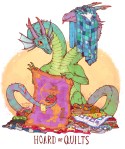
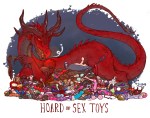
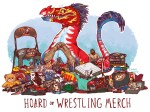
PART FIVE of all these commissioned weird lizards – i cant believe this series has gone on so long honestly these dragons have really made a big impact on my life (and casual knowledge on types of sex toys)
Here, in Russell Wellington, we have a character who has tried to put his ugly past behind him. Like Celeste Middleton, he’s split himself in two. He’s hidden away the monster, but the duality remains.
It can be seen in an office split between stark black and white. Symbols of wealth, prosperity and recognition housed alongside alcohol and cars.
It can be seen in a handshake between figures in dark and light hovering just over his shoulder.
He is a man who builds homes. He’s created his own environment. He lives in a cage of his own making. We can see it in the bars that shutter him in.
Charlie, too, has found a way into the cage.
But also a way out, busting through the bars. Wellington and Middleton – both city names. The town of Welling and the town of Middle. Russell chose the path to rejecting his duality. It did not end well for him. Celeste accepted a middle way. She accepted her duality and forgave herself. She destroyed the cage and found a way out.
Charlie: “I forgive you Dean.”
Dean: “Yeah, well, I don’t.”
Charlie: “I know. That’s kind of your move. How’s that working out for you, huh?”
Dean: “I’m so sorry, kiddo.”
Charlie: “Then prove it.”
Will Dean?
Dean: I’m so sorry, kiddo.
Charlie: Then prove it.












 Hearseeno