It’s easy to say from a position of privilege that today is just another day, that life will go on but it most certainly is not just another day. My heart is broken, my faith is shattered, my mind is numb, and my soul is bleeding.
Not for myself, no, but for my marginalized brothers and sisters. For the oppressed, for the homeless, for the poor, for my friends and neighbors in the lgbtq+ community, for Black lives, Latinx lives, Asian – American lives, Muslim lives, for my sisters and my sisters of color, for the youth, and for all who have face injustice in a land that is suppose to protect them.
I am so, deeply, horrendously, sorry. This country has failed you. We have ignored your suffering and elected to office someone who has built his campaign on hate and prejudice. It is unacceptable. It is deplorable. It is disgusting.
It’s not much, a mere flicker of a flame to gale force winds, but I will continue to fight for you. I will forever stand by your side to see you win. I will always give you my unconditional love. We will fight through these next four years, and the four years after that. We will persevere. We are the future.
My apology is simple but my love for you is strong. I see you, I know your fear, and I will stand with you until the end of time. I am so sorry.
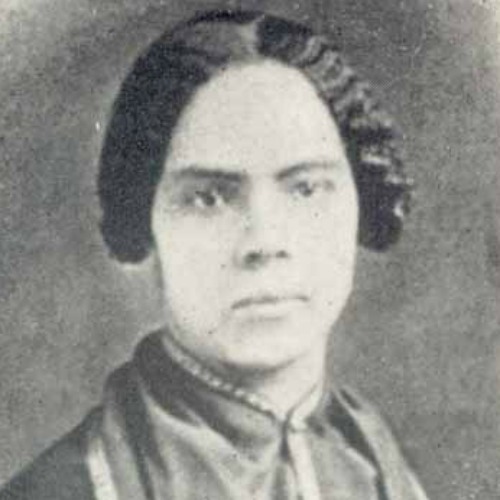
Mary Ann Shadd Cary was born in 1823 to parents dedicated to the abolition of slavery. Her parents taught her much about fighting for equality and often provided shelter for fugitive slaves. Cary moved to Canada with the passage of the Fugitive Slave Law in 1850 where she founded an antislavery newspaper in Canada. After she was widowed during the Civil War, Cary moved to Washington, DC where she taught at public schools and lectured around the country on women’s rights and the women’s suffrage movement. She studied law at Howard University and graduated in 1883 as one of the first black female lawyers in the country.
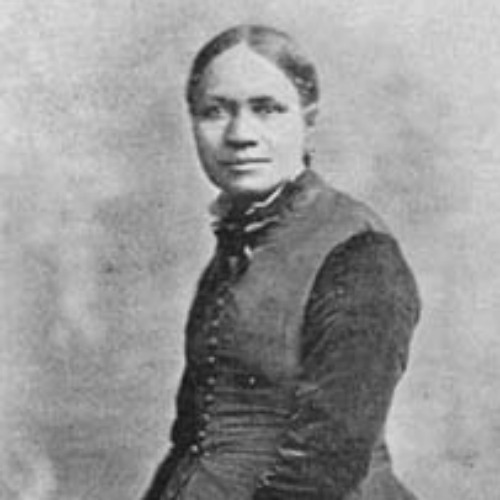
Frances Ellen Watkins Harper was an early abolitionist and women’s suffrage leader. She was one of the few African American women present at conference and meetings about these issues between 1854 and 1890. Harper was also a well-known author whose poetry and essays focused on issues of slavery, gender and racial discrimination. Her writings and lectures made Harper one of the first major popularizers of African American protest poetry.
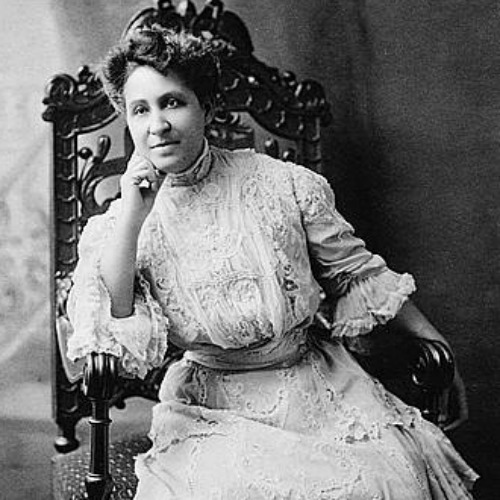
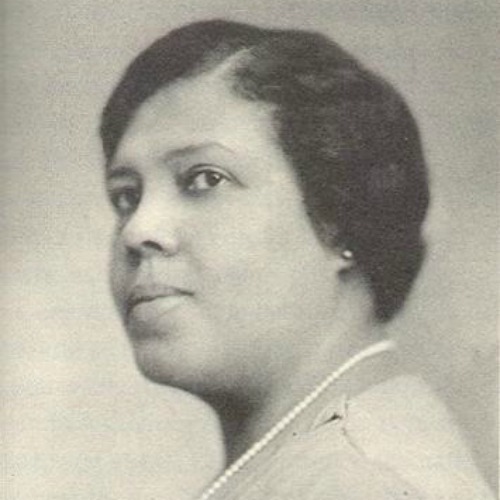
Marry Church Terrell attended Oberlin College as a young woman where she became one of the first African American woman to earn a college degree. After moving to Washington, DC, Terrell became involved in the women’s rights movement. She focused much of her efforts on securing women’s right vote, touring the country to lecture on the issue. In 1896, she and fellow activists founded the National Association of Colored Women and Terrell served as the association’s first president. After the passage of the Nineteenth Amendment, Terrell turned her attention to civil rights and helped bring about the desegregation of restaurants in Washington, DC.
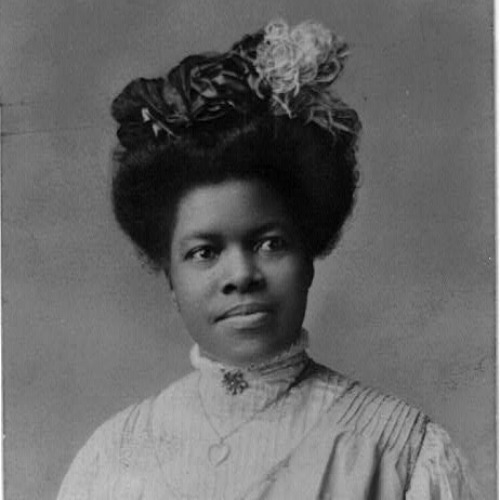
A prominent African American educator, church leader and suffrage supporter, Nannie Helen Burroughs devoted her life to empowering black women. Burroughs helped establish the National Association of Colored Women in 1896 and founded the National Training School for Women and Girls in Washington, DC in 1909. She was outspoken on issues she considered important to African American interests and wrote many articles for leading African American newspapers and magazines. She used these articles to attack injustices endured by African Americans and encourage readers to take responsibility for changing their own conditions.
Daisy Elizabeth Adams Lampkin dedicated her life to supporting women’s and civil rights. Lampkin began hosting local suffragette meetings at her home near Pittsburgh and organizing African American women to engage in consumer groups in 1912. Much of her efforts centered on the organization of women’s groups and her leadership earned her the position of president of the Lucy Stone Woman Suffrage League in 1915. Later in life she also served as a field secretary and fundraiser for the NAACP.
Written by Alison K., Digital Content Specialist, Smithsonian National Museum of African American History and Culture.
Did you know that this woman, who plays Councilwoman Hawley in Avengers and Winter Soldier…
Is also this woman….
Who played Jessica 5 in Logan’s Run in 1976?
Her name is Jenny Agutter, and her longevity in the genre is oddly pleasing to me for some reason.
No way!!! I love her in Logan’s Run!! (Psst. Don’t tell anyone I actually like that movie and have owned it on DVD for years and watched it probably 10 times. It’s a little embarrassing.)
larinah wrote: man she still hasn’t found sanctuary huh?
LOL. At least she lived past 30, eh?
Did you know that this woman, who plays Councilwoman Hawley in Avengers and Winter Soldier…
Is also this woman….
Who played Jessica 6 in Logan’s Run in 1976?
Her name is Jenny Agutter, and her longevity in the genre is oddly pleasing to me for some reason.
Railroad Tracks
The U.S. Standard railroad gauge (distance between the rails) is 4 feet, 8.5 inches.
That’s an exceedingly odd number.
Why was that gauge used?
Because that’s the way they built them in England, and English expatriates designed the U.S. Railroads.
Why did the English build them like that?
Because the first rail lines were built by the same people who built the pre-railroad tramways, and that’s the gauge they used.
Why did ‘they’ use that gauge then?
Because the people who built the tramways used the same jigs and tools that they had used for building wagons, which used that wheel spacing.
Why did the wagons have that particular Odd wheel spacing?
Well, if they tried to use any other spacing, the wagon wheels would break on some of the old, long distance roads in England, because that’s the spacing of the wheel ruts.
So, who built those old rutted roads?
Imperial Rome built the first long distance roads in Europe (including England) for their legions. Those roads have been used ever since.
And the ruts in the roads?
Roman war chariots formed the initial ruts, which everyone else had to match for fear
of destroying their wagon wheels.
Since the chariots were made for Imperial Rome, they were all alike in the matter of wheel spacing.
Therefore, the United States standard railroad gauge of 4 feet, 8.5 inches is derived from the original specifications for an Imperial Roman war chariot.
In other words, bureaucracies live forever.
So the next time you are handed a specification, procedure, or process, and wonder, ‘What horse’s ass came up with this?’,
you may be exactly right.
Imperial Roman army chariots were made just wide enough to accommodate the rear ends of two war horses.
Now, the twist to the story:
When you see a Space Shuttle sitting on its launch pad, you will notice that there are two big booster rockets attached to the sides of the main fuel tank. These are solid rocket boosters, or SRBs.
The SRBs are made by Thiokol at their factory in Utah.
The engineers who designed the SRBs would have preferred to make them a bit larger,
but the SRBs had to be shipped by train from the factory to the launch site.
The railroad line from the factory happens to run through a tunnel in the mountains
and the SRBs had to fit through that tunnel.
The tunnel is slightly wider than the railroad track, and the railroad track, as you now know,
is about as wide as two horses’ behinds.
So, a major Space Shuttle design feature
of what is arguably the world’s most advanced transportation system was determined over two thousand years ago by the width of a horse’s ass.
And you thought being a horse’s ass wasn’t important!
Now you know, Horses’ Asses control almost everything.
Explains a whole lot of stuff, doesn’t it?
This is the single most mind blowing fact I’ve read on tumblr, every day is a school day-thank you.
Nice history lesson!
My daughter and I were just discussing this very subject.
fictim
A person who has stayed up too late reading fanfic, thus leaving themselves with semi-regrets and exhaustion the next day.
Thank you @zenthisoror this is my new favourite word.
Here’s me! On Melania Trump, and why the natural urge to laugh at her or hate her is disguising a very clear and present danger.
As a woman who was once married to a narcissist, I can tell you that it is very compelling to believe in your partner’s aspirations. They want to be wise, admirable, generous, and good, and sometimes they are. They will reward you with love and affection when you reflect that image of themselves back to them. But that’s not all that they are, and woe to the partner who is not constantly working at justifying, overlooking, and explaining away any of their imperfections.
I don’t know anything about Melania Trump, and I think that there are very few people who do. Sometimes I wonder if there’s a reason for that.
When you’re in a relationship with a narcissist, eventually they will demand that you whittle away every part of yourself that threatens them or doesn’t reflect back that glorious mirror image that they crave. It’s a death by inches. Each thing it costs you is so small that it is barely noticeable. You’re caught up in constant vigilance and defense against the emotional blows you are taking and can’t see more than a few feet around you. It seems reasonable to accede that step on the battlefield, and then that one, and then another, until months and years go by. By the time you look up and clear your head, you’ve lost the war and there is very little of yourself left.
So, when we look at the public face of a partner of a narcissistic, I don’t really think we’re seeing who they are as a person. The narcissist has shaped them into a blank screen onto which they can project both all those things they love about themselves and all of their failings to be what they aspire to be. I don’t know Melania Trump. I don’t know what role she has in her relationship with her husband and his family. But if her experience of partnering a narcissist is in any way similar to mine, then her husband is doing everything he can to subvert her will to his, until she is a blank screen onto which he project at will. When we call her names and dismiss her, we are projecting our own baggage onto onto someone who has been shaped by her relationship to take it, and we become just as guilty of emotional abuse as he is.


 Hearseeno